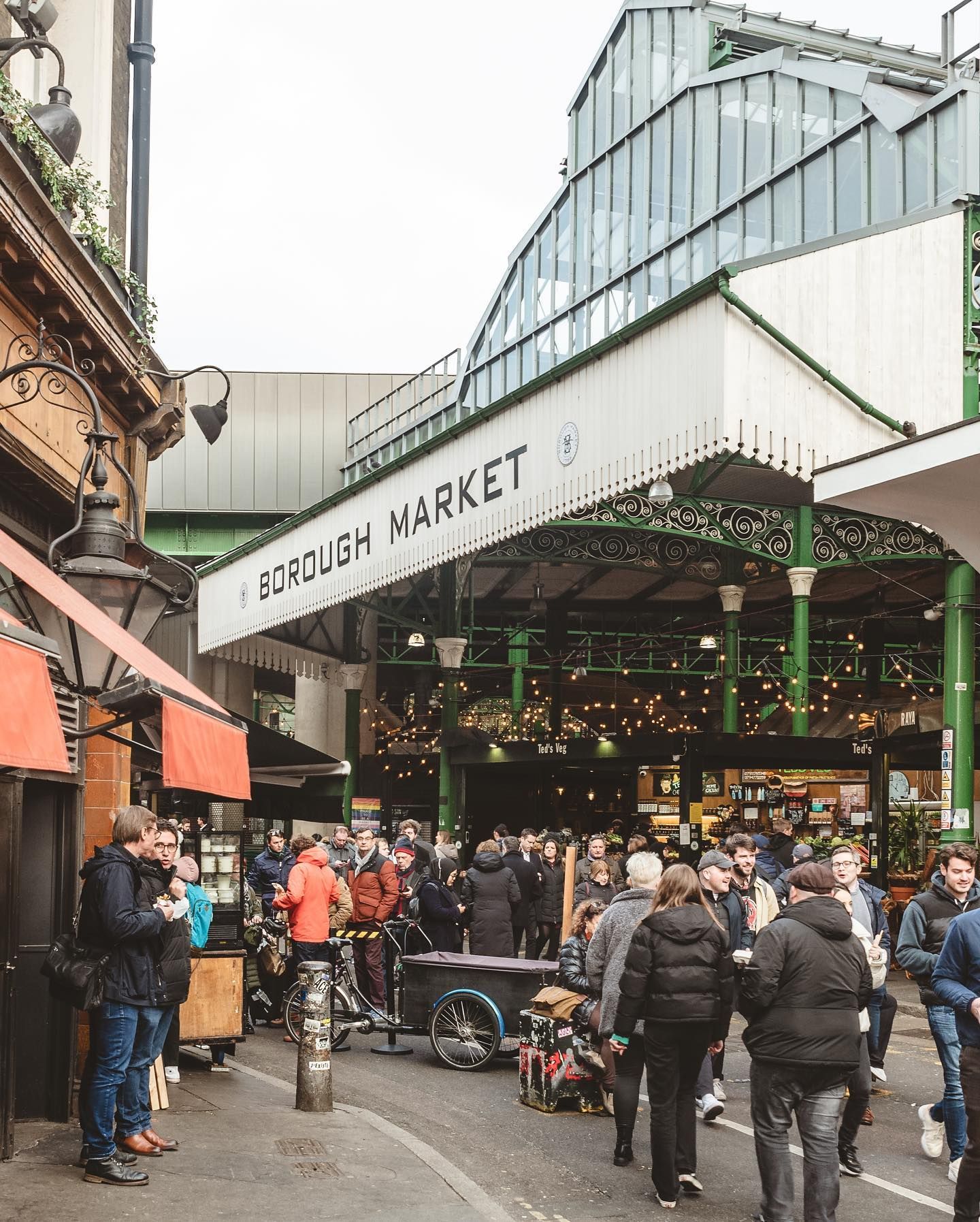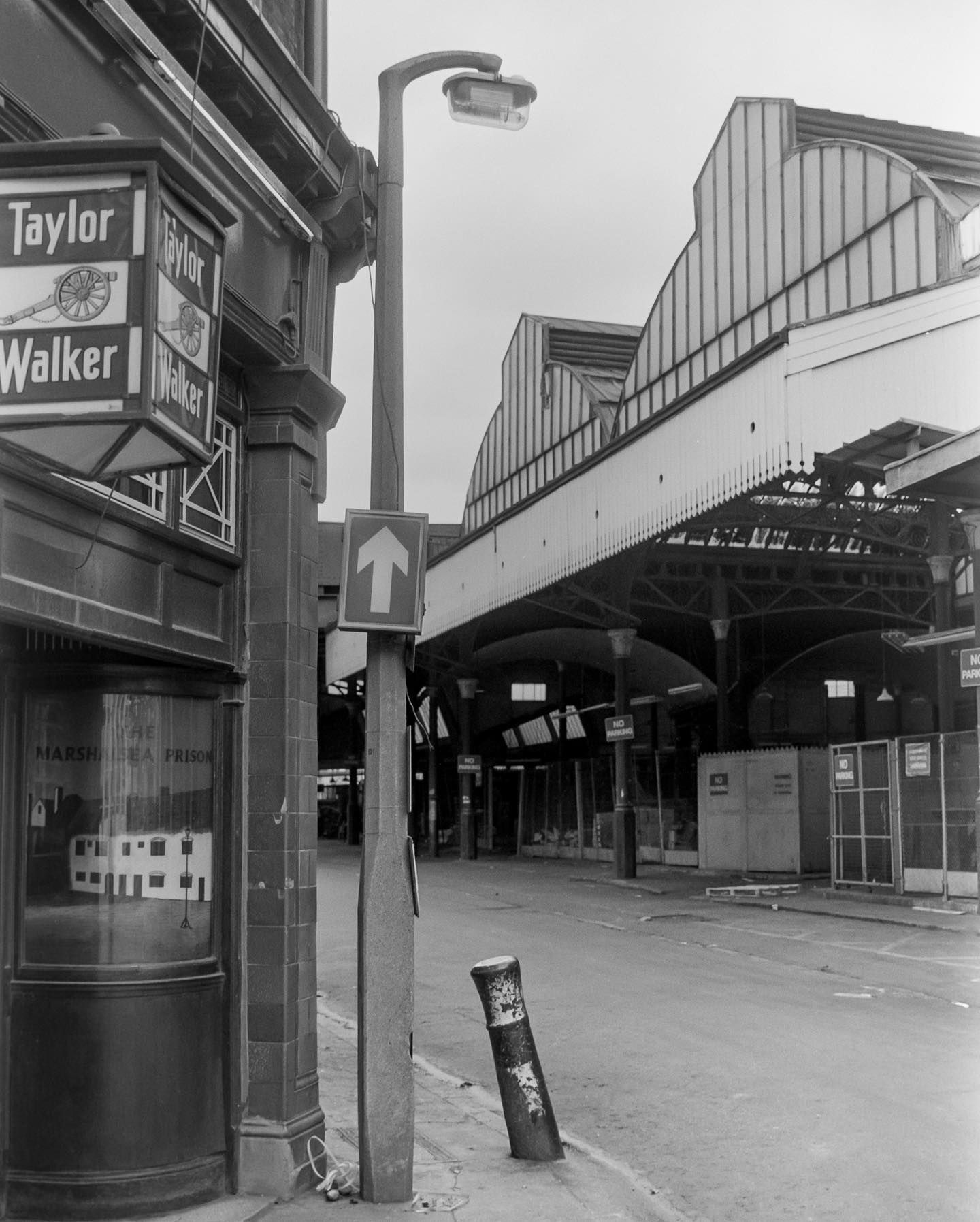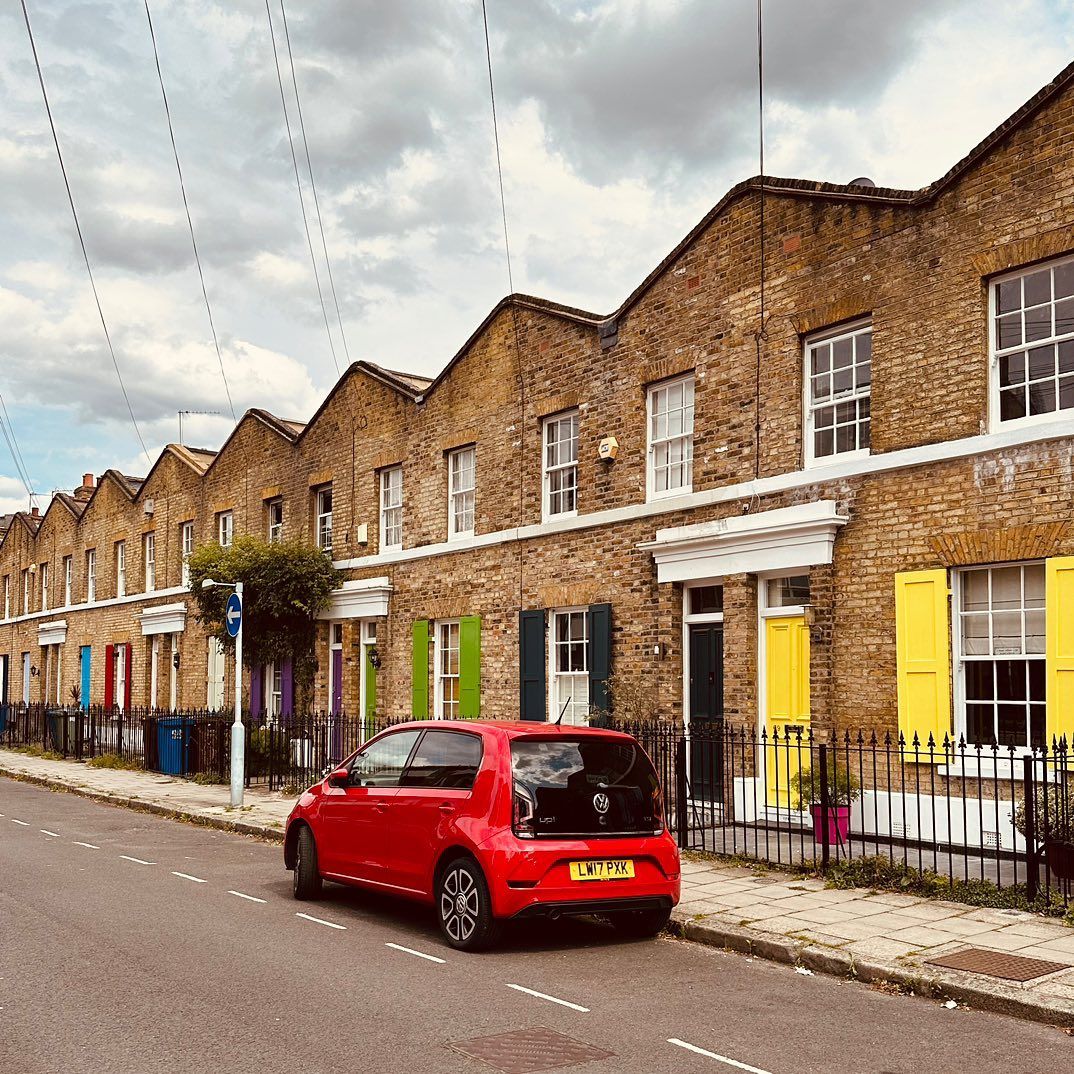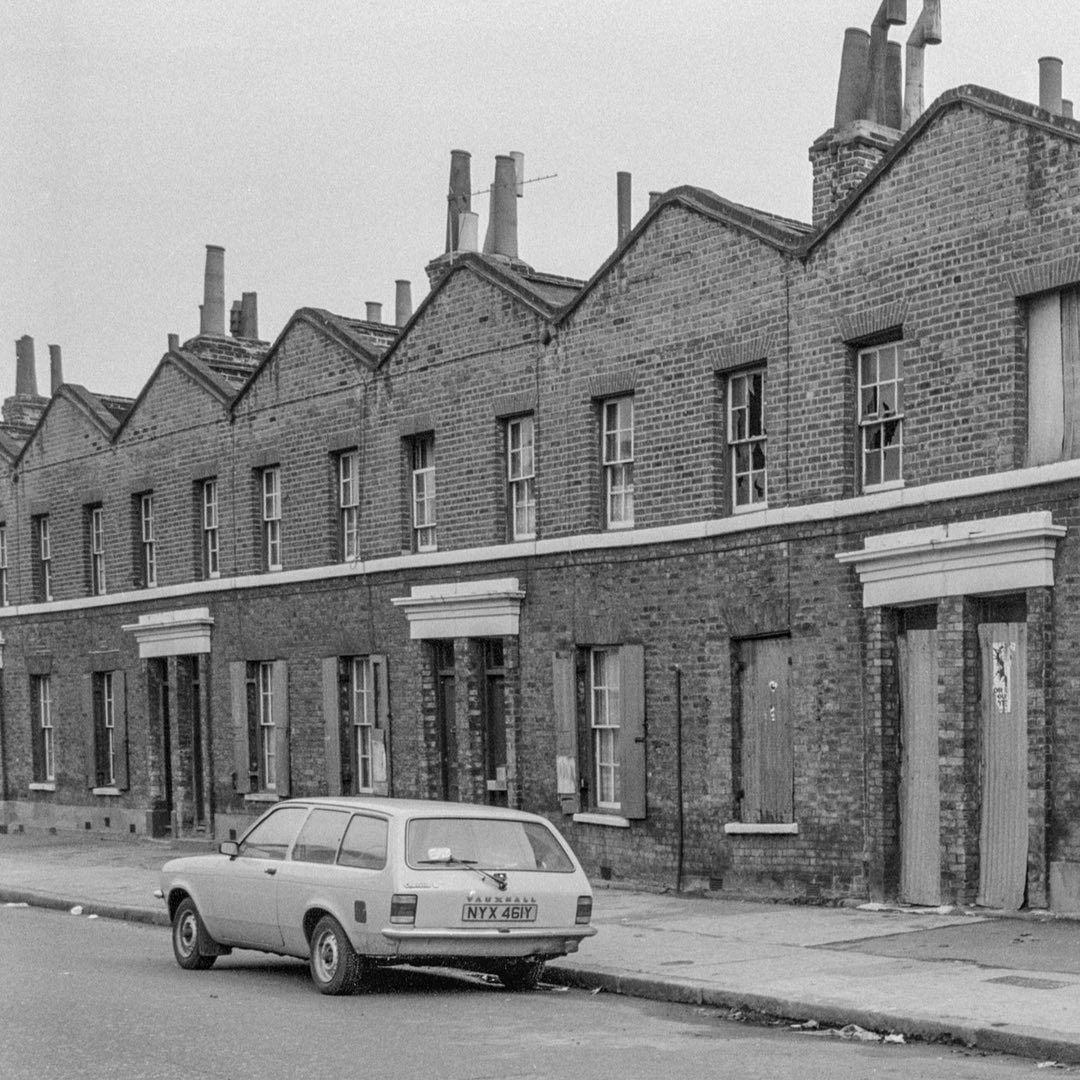
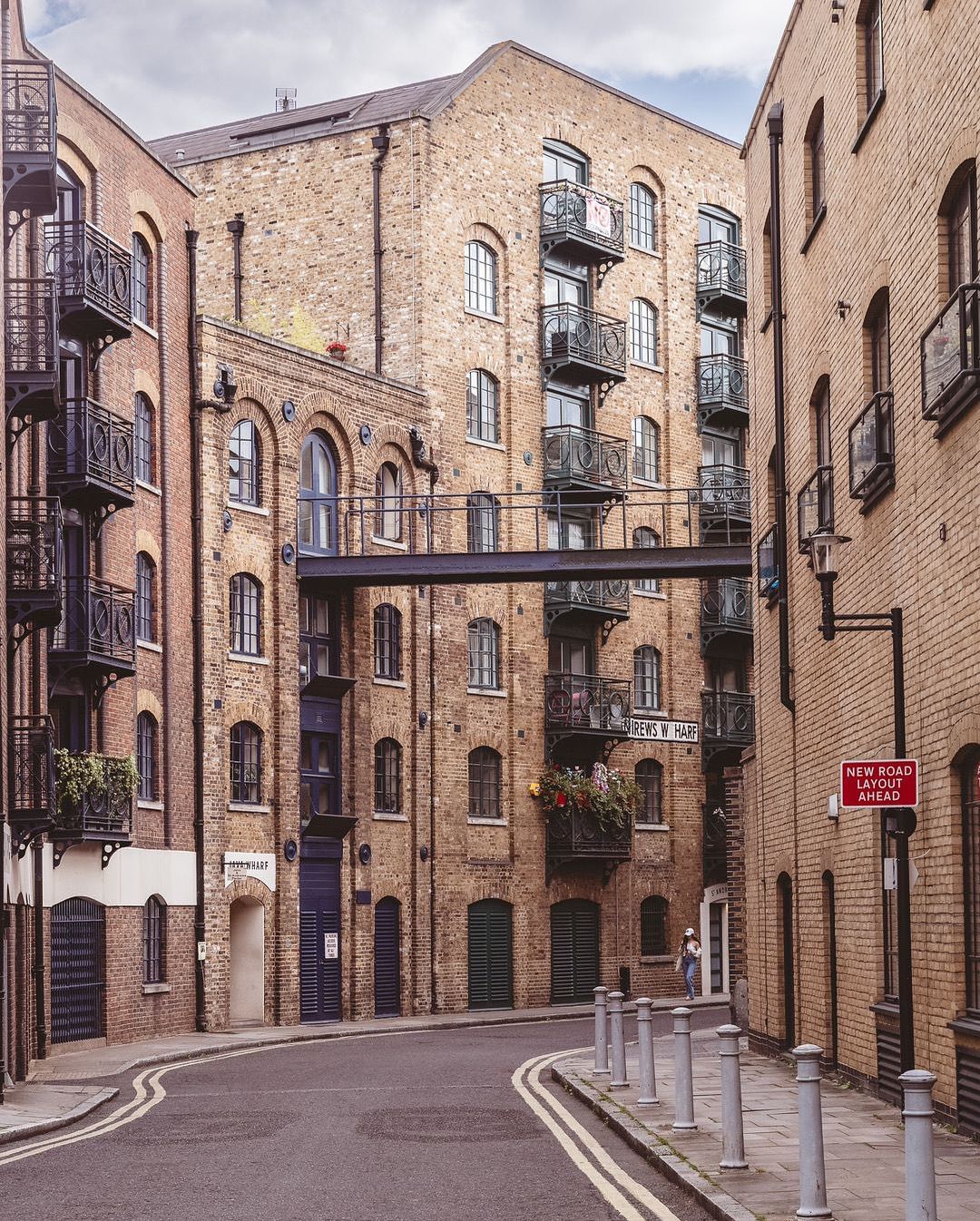
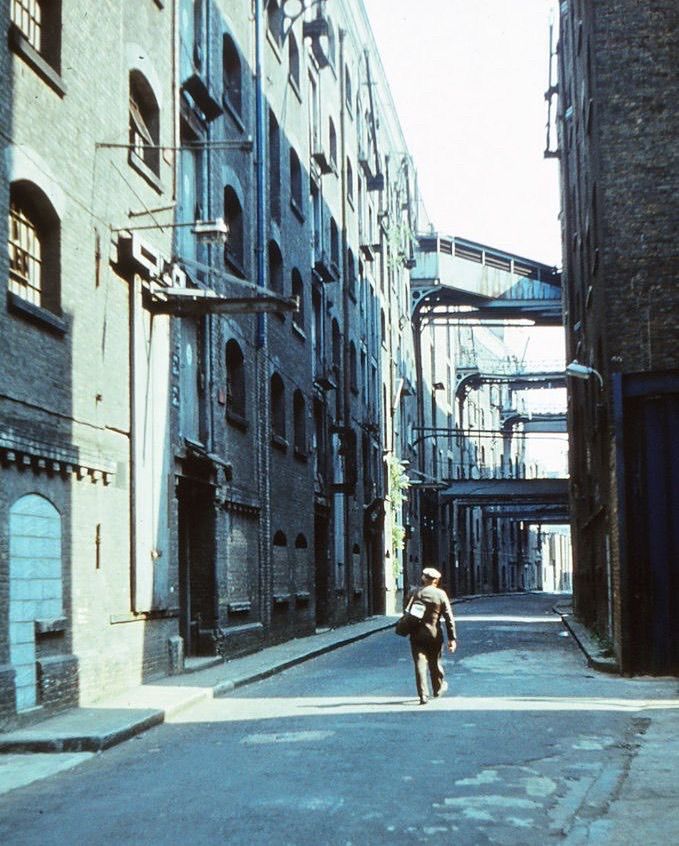
Swipe through to see how this iconic area has transformed over the years! We’ve got a snapshot from 1985 by the talented Peter Marshall, showcasing Shad Thames in its industrial heyday.
This area was once the densest concentration of warehouses in London, a hub for storage that supplied much of the city with goods.
Fast forward to today, and many of these old buildings have been beautifully converted into modern flats, while still keeping their character with those iron gangways and industrial-style architecture. What was once a gritty, working area has become one of London’s most desirable riverside neighbourhoods.
It’s striking how much has changed, and how much of Shad Thames’ history remains.
Then
The name goes back a long way. Southwark Council says Shad Thames is a corruption of St John at Thames, after the Knights of St John of Jerusalem, who owned the land in the Middle Ages. Both sides of the street were built up by the end of the 1600s.
Butler's Wharf Ltd dominated here for over a century. Historic England records that the main Butler's Wharf building, put up between 1871 and 1873 to designs by Tolley and Dale, was the largest wharf on the Thames when it was finished. The landward blocks followed in the 1880s and 1890s, creating what Southwark calls the densest warehousing in London.
Tea and spices were among the goods stored around St Saviour's Dock. The iron gangways over the street linked the warehouses at high level, so goods could move from building to building. By the early 1970s that trade had gone and the warehouses stood empty.
Now
Conran & Partners masterplanned the regeneration of Butler's Wharf, its first big London project, in stages over a decade from the 1980s.
The warehouses along this end of the street are Grade II listed, from the small Crown Wharf of the 1840s to the bigger St George's and St Andrew's Wharves. Java Wharf, on the left of our photo, is largely a 1980s rebuild behind its original front.
Details worth noticing
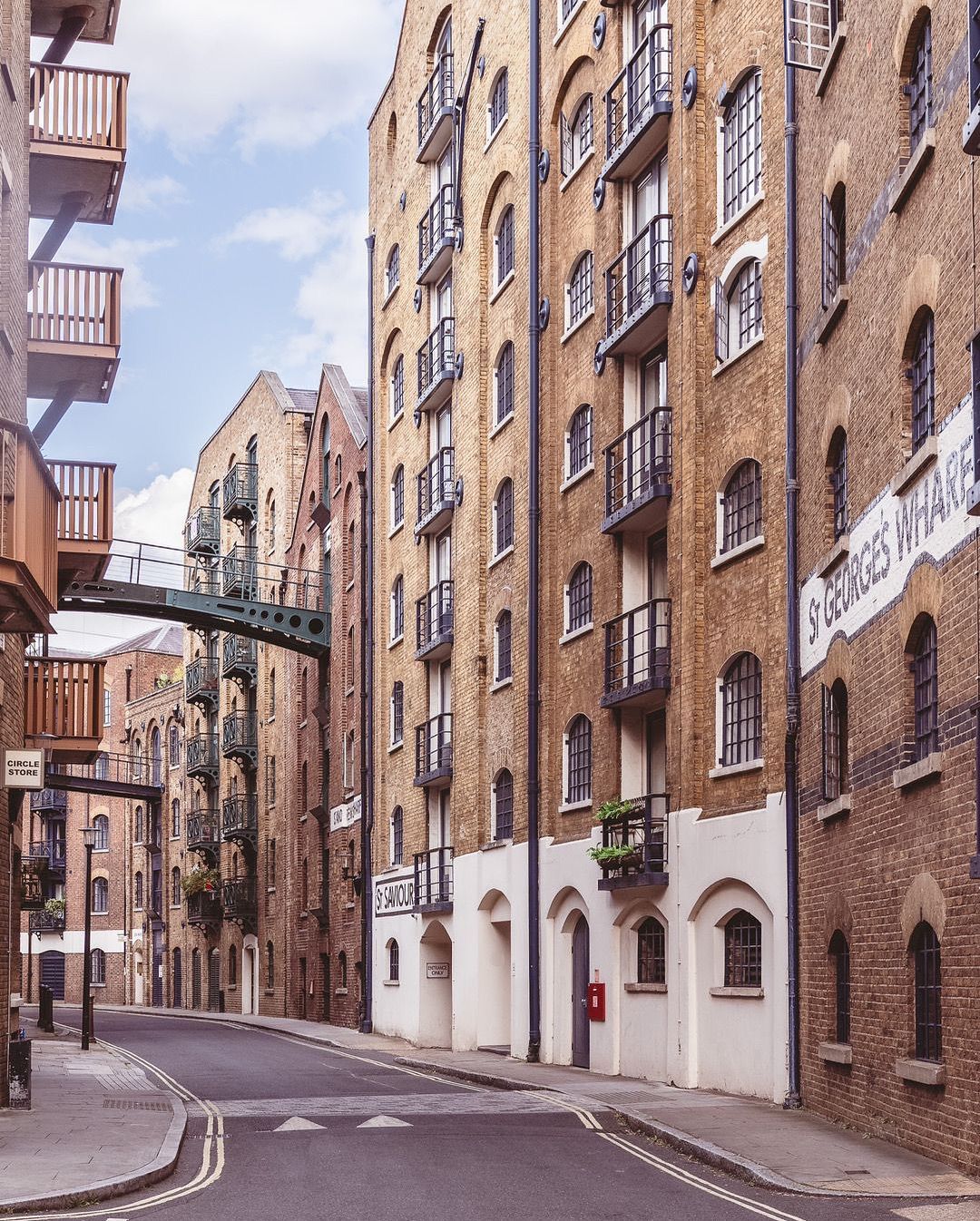
Many of the gangways you see today are replicas. Historic England's listing for St Andrew's Wharf notes the replica gangway that crosses the street from its fourth floor.
The old hoist doors, stacked one above another where goods were winched up, are now balconies.
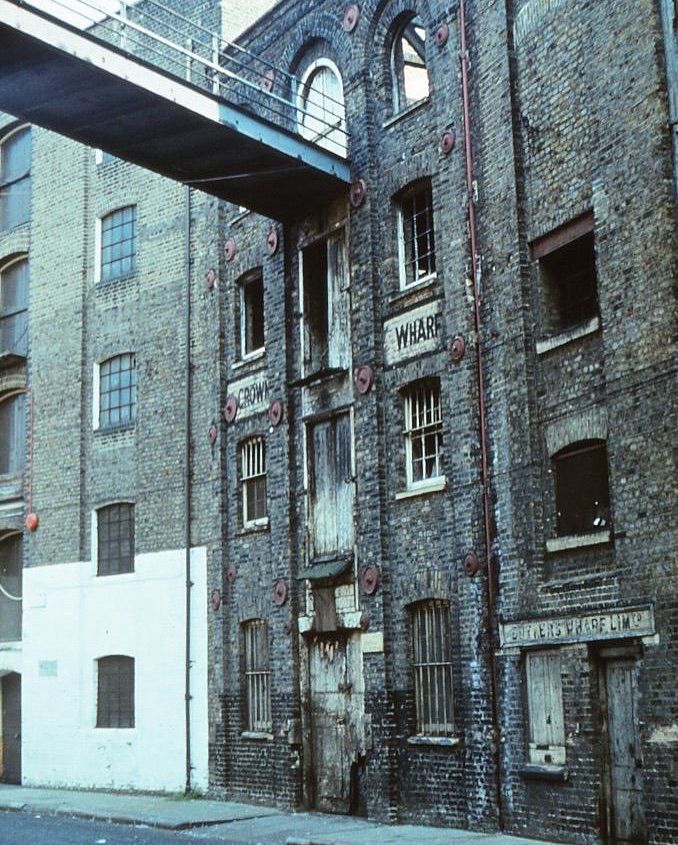
Look out for painted names. Southwark singles out the St George's Wharf sign as a survivor. Crown Wharf, shown in the older close up here, has since lost its big painted name; next door you can read Butlers Wharf Ltd.
One honest note: the 1985 photo and ours aren't taken from exactly the same spot. The older one looks down a straight run of bridges, while ours shows the bend at the east end by St Saviour's Dock.
Your memories
Did you know Shad Thames before the conversions, when the warehouses stood empty? Tell us what you remember.
Share your memories in the comments on our Instagram post, linked below.