Bermondsey Street has come a long way, from a hub of tanneries and warehouses to the thriving cultural and foodie hotspot we know today.
Then
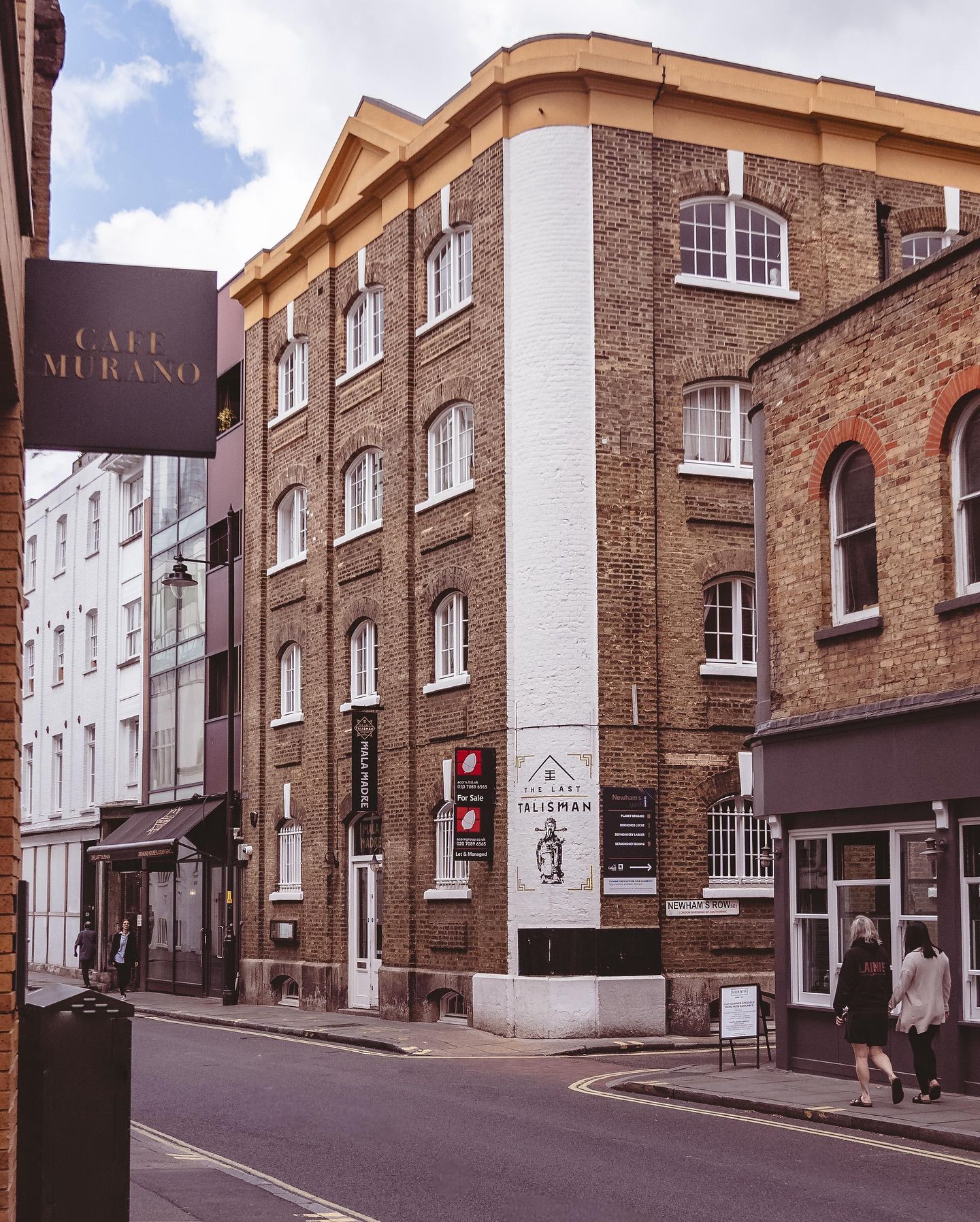
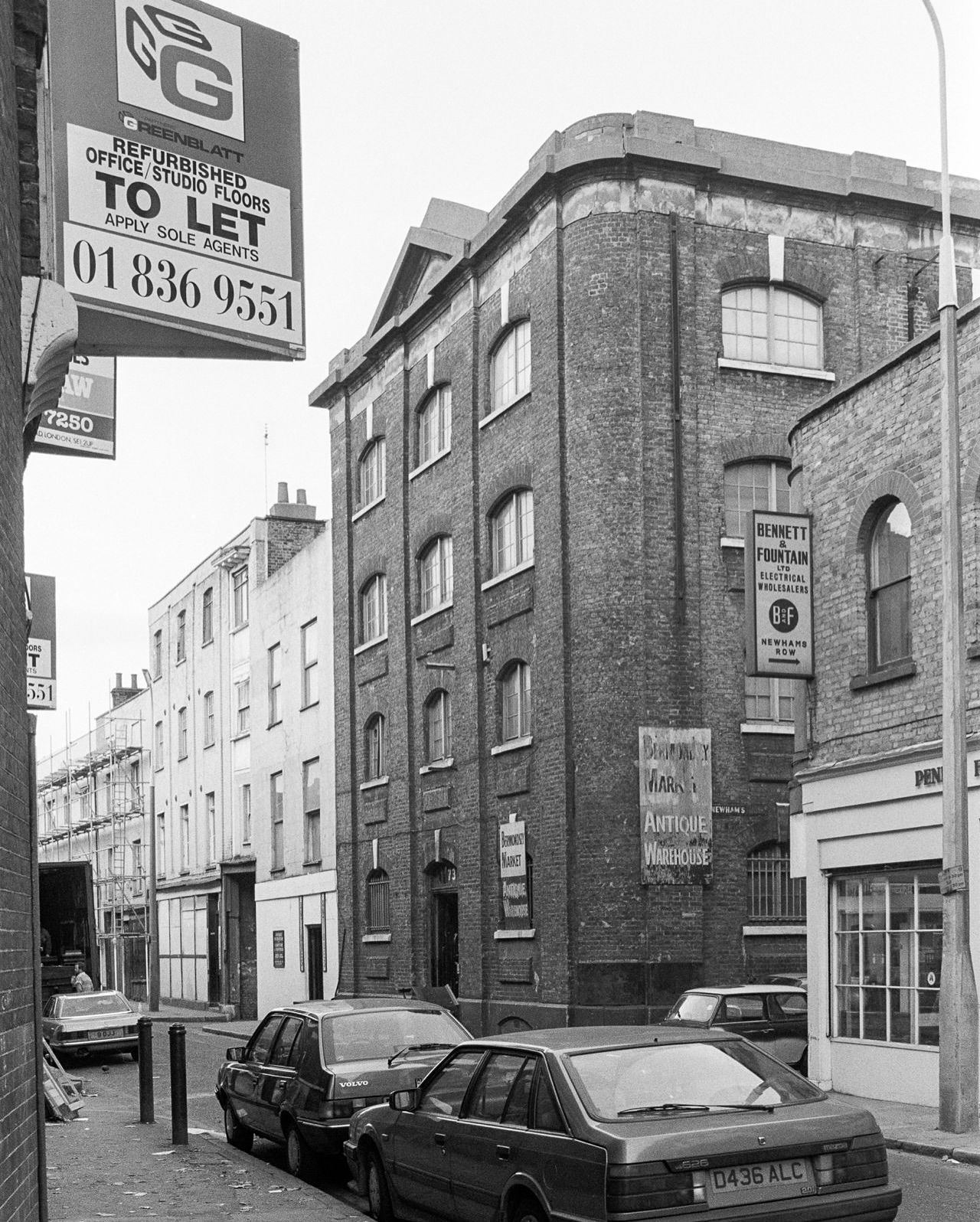
This is 173 Bermondsey Street, on the corner of Newham's Row. It's Grade II listed, and Historic England describes it as an early 19th century cloth factory: four storeys over a basement in brown brick, with a rounded corner and giant pilasters running the full height.
Southwark Council's conservation area appraisal calls it a key corner in a run of three and four storey factories and warehouses. It's a stretch with a canyon like feel and, in the council's words, a strongly industrial character.
The tanneries themselves were mostly in the streets behind, packed in with tiny houses between the Leather Market and Snowsfields and around Tanner Street. The Leather Market opened in 1833 and the Leather Exchange in 1879. The trades fed each other too: the appraisal notes that local hatters used wool from the leather trade.
After the war, warehouses like this were used for storage and workshops, and Bermondsey became a centre for the antiques trade. In Peter Marshall's photo, which his own archive dates to 1988, the building is lettered Bermondsey Market Antique Warehouse. A sign beside it points down Newham's Row to Bennett & Fountain, electrical wholesalers, and an agent's board offers refurbished office and studio floors to let.
Now
As late as 2003 the council still listed the building as needing restoration and a new use. Since then the upper floors have become flats, Milliners House, and the ground floor is The Last Talisman, a pub and cocktail bar with an Asian grill and a hire space called Mala Madre.
The council's appraisal traces how the street turned: warehouses became lofts in the 1980s and 1990s, art and creative businesses moved in, and restaurants and cafes followed. Cafe Murano's hanging sign, on the left of our photo, belongs to its restaurant across the road at 184.
Details worth noticing
Look up at the top. The stone cornice and small pediment, painted cream today, are the ones described in the listing.
The barred basement window and the grilles on the corner windows have survived since 1988. The two antique warehouse boards, a big one on the corner and a small one by the door, have gone.
Above the central door, the fanlight that showed the number 173 now reads Mala Madre.
And the Newham's Row street sign is fixed to the building today, close to where the wholesalers' arrow pointed in 1988.
Your memories
Some say it’s lost a bit of its gritty charm, while others love the transformation. What do you think, has Bermondsey Street changed for the better?
Share your view in the comments on our Instagram post, linked below.